What makes people pick up the phone
It's rarely one dramatic thing. More often it's a canopy thinning from the top down, a lean that wasn't there last spring, bark splitting low on the trunk, a fork that has opened up, or ground lifting on one side of the base. Storm damage is the obvious one, where a limb tore off and left a wound the tree can't close.
A dead limb over open lawn in the back corner can wait for a scheduled day. Anything over the house, the driveway, the walkway your kids use, or the spot where you park is the call we want today. The trees that hurt people are usually the ones nobody worried about, because they looked full and green right up until they didn't.
We also get calls about trees that aren't dead at all. A healthy tree in the wrong place is still a problem: roots where they shouldn't be, or a trunk that has grown into the roofline.
What we look at before anyone climbs
We start at the base and work up. Lean direction, where the weight sits, which way the wood wants to go once it's cut, and what's underneath it. A hollow base under a full canopy gets our attention fast, because from the kitchen window it looks fine. So does a crack you can only see from directly underneath.
On most residential calls the tree comes out, and the real decision is how. That depends on what's around it and where the weight is, so we settle it standing under the tree, not from the truck.
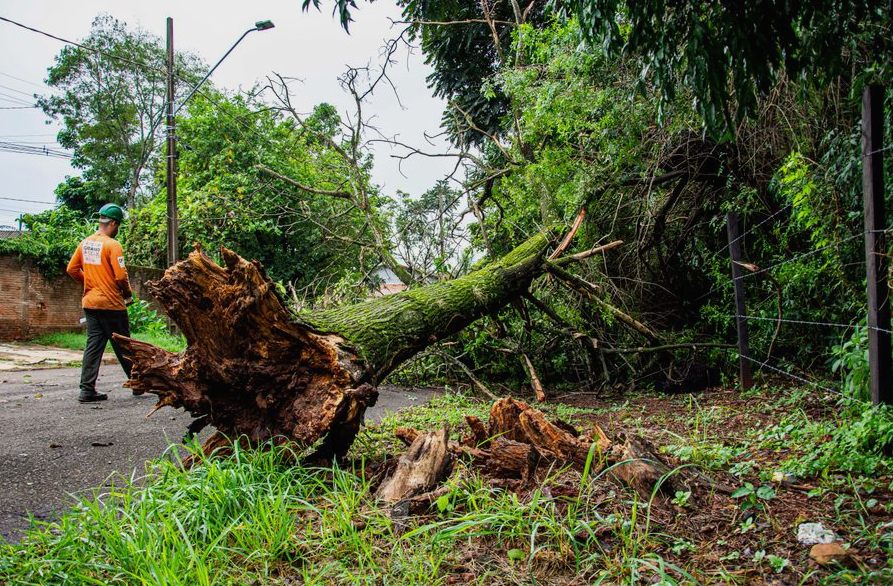
Taking it down in pieces
We don't drop trees in yards. We take them apart. Rigging rope goes up high and gets anchored, a carabiner clips onto the piece we're sending down, and the ground crew controls how fast it runs and where it stops. Every limb and log comes off on purpose instead of wherever gravity puts it. On a tree with a real lean or a compromised base, that control is the whole job.
The cutting itself is unforgiving. We notch the side the tree is meant to go toward, leave hinge wood to steer it and hold it until it commits, then make the back cut. Our chainsaw operators are trained on those three cuts, and they keep firm footing and two hands on the saw for every one. Bark gets slick after a wet stretch, and a wet trunk is no place to cut one-handed.
The chipper, and why we're strict about it
Whatever comes off the tree can end up at the chipper, and that machine is where a sloppy crew gets hurt. Guards stay on and the emergency stops are in working order. Nobody stands in the path of the in-feed chute, and nobody pushes material in with a hand or a foot, ever.
It's the part of the day homeowners actually watch. Someone at the chipper with a boot jammed against a branch is a crew that has decided speed matters more than going home whole.
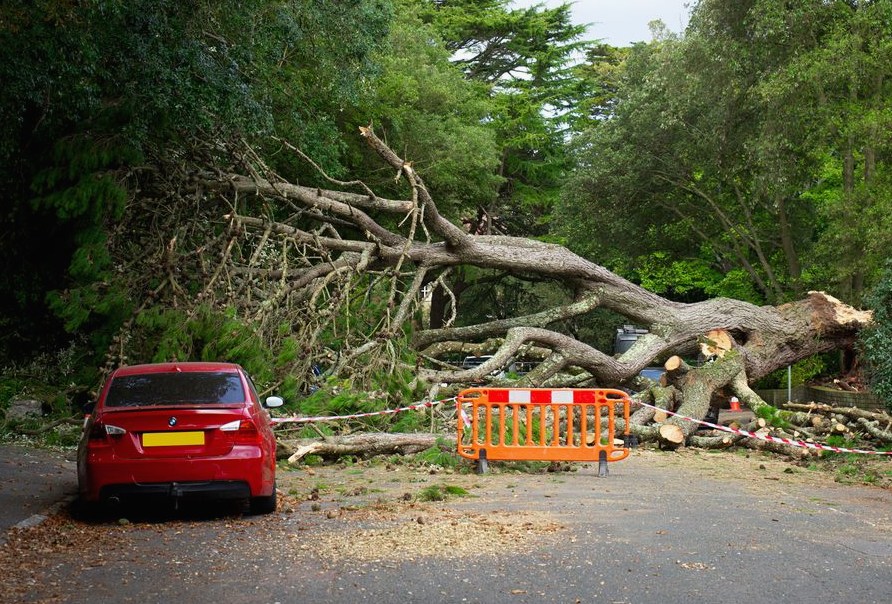
Tight lots, wet weather, and who you hire
Most trees that come down in town aren't in the open. They're between a fence and a shed, over a garden, next to the driveway where the cars sit. With no back field to drop into, the crew carries everything out, and the turf, the beds, and the fence stay where they were. Before we start we walk the property for where the truck can sit, where the chips are going, how far the crew has to carry, and what's underneath that can't be replaced.
Rain matters too. Asheboro gets about 44 inches a year, mostly June through September, with September the wettest at around 4.6 inches. Soft ground on a slope, saturated soil under a root plate, and a truck that leaves ruts all make a job harder. February, our driest month at roughly 2.8 inches, is a far easier time to bring equipment across a lawn. On a tree we aren't sure about, we'd rather wait for a drier window than push through wet ground.
When you compare crews, ask who will actually run the saw and whether they've been trained on notching, hinge wood, and back cuts. Ask for the scope in writing, including what happens to the wood.
How It Works
-
Tell Us What You Need
A two-minute call is enough for us to understand the job and what it'll take.
-
Free On-Site Quote
We come out, look at the space, and confirm exactly what the job involves.
-
Clear, Written Price
You get the scope and the price in writing before any work starts. No surprises.
Some of what that looks like in the field:
- Inspect climbing, cutting, and lift equipment before use, and remove damaged or worn equipment from service.
- When climbing, maintain a secure tie-in and use approved fall protection; in an aerial lift, tie off at the designated anchor point.
Typical Asheboro Pricing
Typical ranges, not a fixed price - the exact number is confirmed in writing before work starts.
$200–$400
$100–$300
Straight Answers to Common Questions
Demand often drops in late fall and winter, which can lower rates within the normal $200–$5,000 range. Mild weather also lets crews work safely without ice or summer foliage blocking access. Booking during slower months may reduce wait times as well.
An unground stump can regrow, attract insects, create tripping hazards, and interfere with mowing or landscaping. Stump removal costs $90–$1,200 depending on size and root depth. Grinding below grade allows soil and grass to be restored over the area.
Hourly rates are uncommon; most jobs are bid by the tree. When charged hourly, expect figures that contribute to the overall $200–$5,000 removal range. Crew size, equipment, and job complexity determine the final total more than an hourly meter.
Serving Asheboro and Nearby
Crews serve Asheboro, NC. Book an Estimate to confirm coverage for your address.
You Might Also Need
How We Do Business
- Free EstimatesThe first visit and our honest read cost you nothing.
- We clean up when we're doneTidying up is part of the job here.
No-Pressure Estimates
Ready when you are, request a free estimate.
Estimates · No-pressure scheduling