Verify insurance before anything else
Ask for a certificate of insurance and call the carrier to confirm the policy is current. You want general liability and workers compensation at minimum. Without workers comp, if a crew member gets hurt on your property, you can end up paying the medical bills. Ask for references from recent local jobs and call them. A contractor who hesitates or deflects on insurance should not be holding a chainsaw over your house.
Questions that separate experienced crews from day laborers
Ask how they plan to take the tree or limb down. A good answer covers the tree's lean, the weight in the crown, the wind, and obstacles, and it includes a cleared escape path away from the fall line. Ask about chainsaw training too. The person running the saw should be able to describe notching, hinge wood and the back-cut, and should keep firm footing and a two-handed grip while cutting. Ask who supervises. If the person who gave you the estimate is not the one doing or overseeing the work, find out who will be on site and what experience they have.
Ask about the chipper. It should have guards and emergency stops, nobody should stand at the in-feed chute, and material should never be pushed into the machine with hands or feet. A crew that improvises around the chipper is probably improvising elsewhere on the job.
If anyone will be climbing, ask what they climb with. A safety harness and saddle is the baseline equipment for work up in the tree.
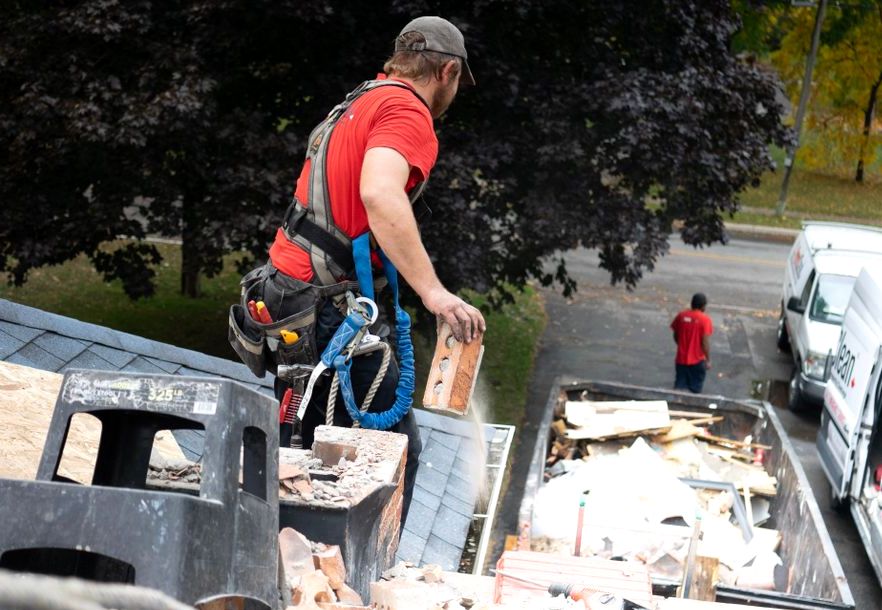
Red flags that show up around the estimate
Watch for pressure tactics: someone who insists you sign today to lock in a price, or who can only start tomorrow. Contractors with real schedules do not need your answer five minutes after they leave your driveway.
Be wary of a quote far below the others. In tree work a low number usually means corners cut on equipment, experience or insurance, or charges added once the job is opened up. Stump removal runs roughly $90 to $1,200 per stump. That is a wide range because size, roots and access vary so much, so a number at the very bottom for a big stump deserves a question. If one estimate is half the others with no clear reason, the reason usually shows up after the work starts.
Also watch for anyone who wants you to deal with the tree once it is on the ground. The crew that cut it owns the cleanup and removal unless the quote says otherwise.
Cabling: what to ask
If a mature tree has a weak fork or a limb you worry about, cabling can be an alternative to taking it down. Cabling typically runs $200 to $400 per tree. A bigger tree with several weak points or hard access will run more, and a flat number quoted without anyone looking at the tree is not reliable. Ask whether the crew has done this specific kind of installation before, and where in the tree they plan to attach the hardware and why. Because the work happens up in the canopy, the harness and saddle question applies here too.
Local ground and winter weather
Periodic winter freezes bring some freeze/thaw movement to the ground here, so a lean that looked settled in fall can look different after a cold snap. If you think a tree has shifted, tell the crew when you call. Rion soil is well drained, which generally keeps yards workable after rain, but if part of your yard stays soft, mention it. A crew that brings a chipper and grinder onto soft ground can rut the lawn or get stuck.
Comparing quotes
Get at least three estimates and compare them line by line: the tree work, debris removal, stump treatment and site protection. A low quote that leaves out the stump costs more when you hire someone else to grind it. A quote that says nothing about hauling away debris may leave you with the logs.
Ask each contractor what they see as the hard part of your job. The one who can tell you where the tree will land, what they will do if the lean changes mid-cut, and how they will protect your fence or landscaping has thought about your yard specifically. The one who prices it over the phone without visiting is guessing.
How It Works
-
Tell Us What You Need
A two-minute call is enough for us to understand the job and what it'll take.
-
Free On-Site Quote
We come out, look at the space, and confirm exactly what the job involves.
-
Clear, Written Price
You get the scope and the price in writing before any work starts. No surprises.
Some of what that looks like in the field:
- Use chipper guards and emergency stops, stay clear of the in-feed chute, and never push material into the machine with hands or feet.
- Walk the site before work and identify power lines, damaged limbs, tree lean, nearby structures or traffic, and unstable ground.
Straight Answers to Common Questions
Demand often drops in late fall and winter, which can lower rates within the normal $200–$5,000 range. Mild weather also lets crews work safely without ice or summer foliage blocking access. Booking during slower months may reduce wait times as well.
An unground stump can regrow, attract insects, create tripping hazards, and interfere with mowing or landscaping. Stump removal costs $90–$1,200 depending on size and root depth. Grinding below grade allows soil and grass to be restored over the area.
Hourly rates are uncommon; most jobs are bid by the tree. When charged hourly, expect figures that contribute to the overall $200–$5,000 removal range. Crew size, equipment, and job complexity determine the final total more than an hourly meter.
Serving Asheboro and Nearby
Crews serve Asheboro, NC. Book an Estimate to confirm coverage for your address.
You Might Also Need
How We Do Business
- Free EstimatesThe first visit and our honest read cost you nothing.
- Reachable when you need usYou're never left chasing us for an answer.
Straightforward Pricing
Ready when you are, request a free estimate.
Estimates · No-pressure scheduling
Updated October 2026